> ## Documentation Index
> Fetch the complete documentation index at: https://parabola.io/docs/llms.txt
> Use this file to discover all available pages before exploring further.
# Draft and version history
> How the live and draft versions of a flow differ, how to restore an earlier version, and how long history is kept.
A draft gives you room to make bigger changes without disturbing what's live and running. Version history keeps every step of that work recoverable: what changed, who changed it, and a way back to any point.
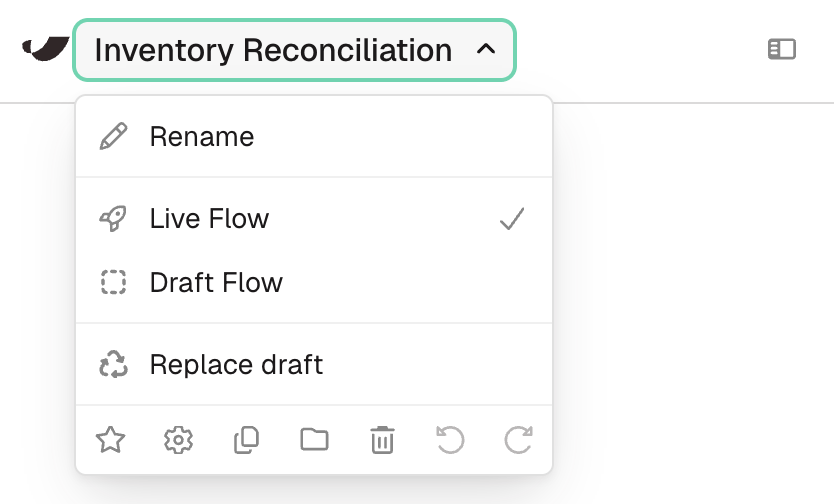
Flows have two versions: **draft** and **live**. Switch between them from the flow name in the top-left corner:
* **Live Flow** checked means you're looking at the live version.
* Select **Create a new draft** or **Draft Flow** to open the draft.
## Live version
Every flow defaults to the live version, the one that runs via the **Run flow** button or via schedules and triggers. You can build and edit in the live version unless the flow is actively running, has active schedules or triggers, or you have read-only permissions. The live version doesn't need to be published; it exports data by running on a schedule or whenever you click **Run flow**.
## Draft version
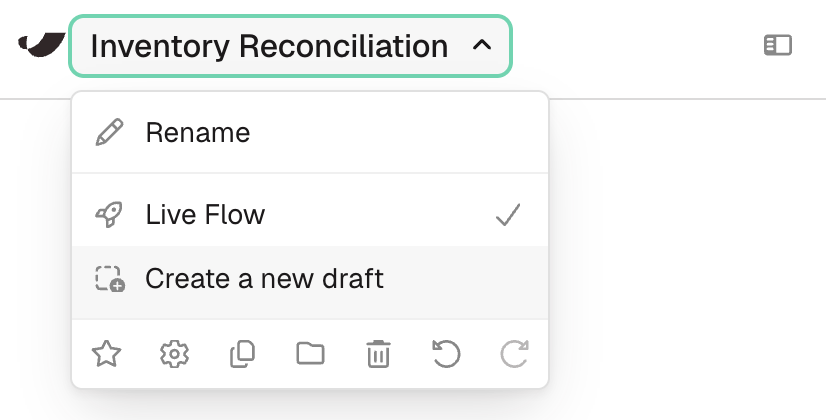
Create one draft at a time to test changes. Nothing in the draft affects the live version; scheduled and triggered runs always use live flows. Publish your draft first for it to run, and once published it overwrites the current live version.
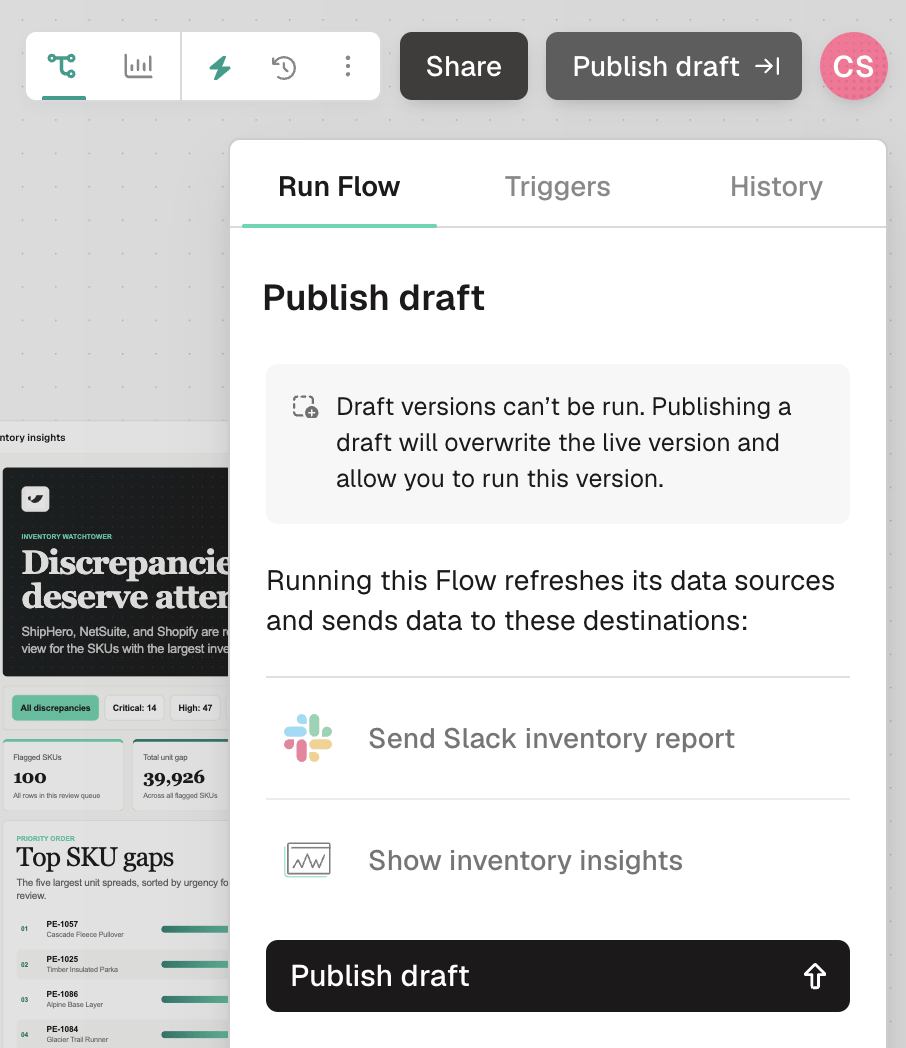
### Start a draft
Small edits can go straight to live (renaming a Parabola Table, dropping an extra column). For anything bigger, a draft lets you take your time without a triggered run catching your flow mid-change.
### Publish, or start over
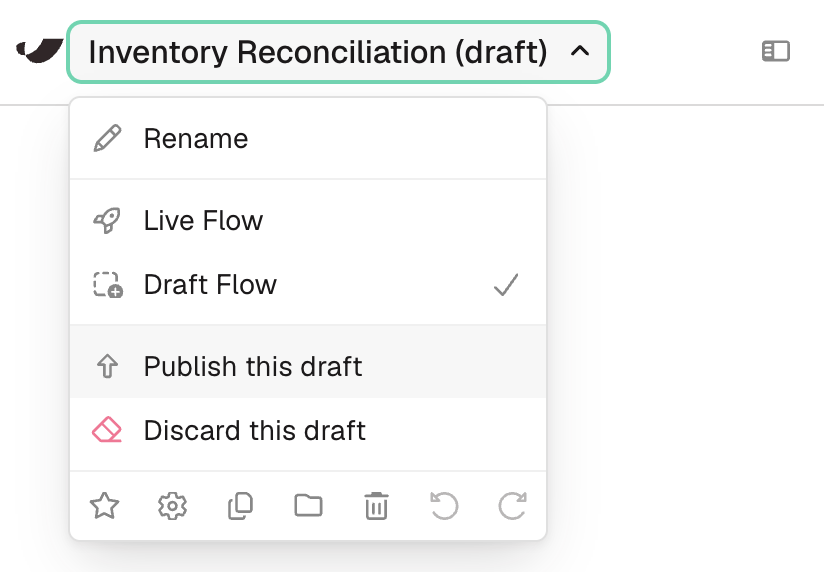
You can only have one draft at a time, but you can always discard it and start fresh. **Publish** the draft from the top-right corner when it's ready. That version becomes live immediately, and the draft is gone until you start a new one. For more control over how draft and live interact, open the gear icon under the flow name for **Live flow locking** settings.
## Version history
As you build and iterate, Prowork automatically captures snapshots of your work. This is useful when collaborating, undoing a change from days ago, or keeping a record of who edited a flow and when.
### Viewing version history
Open the **Flow history** panel from the upper-right corner of the canvas and select the **Version history** tab. You'll see versions grouped by day, most recent first. Each entry includes the user who made the changes, the timestamp, whether the change was on the live or draft version, and a note if it was restored from an earlier version.
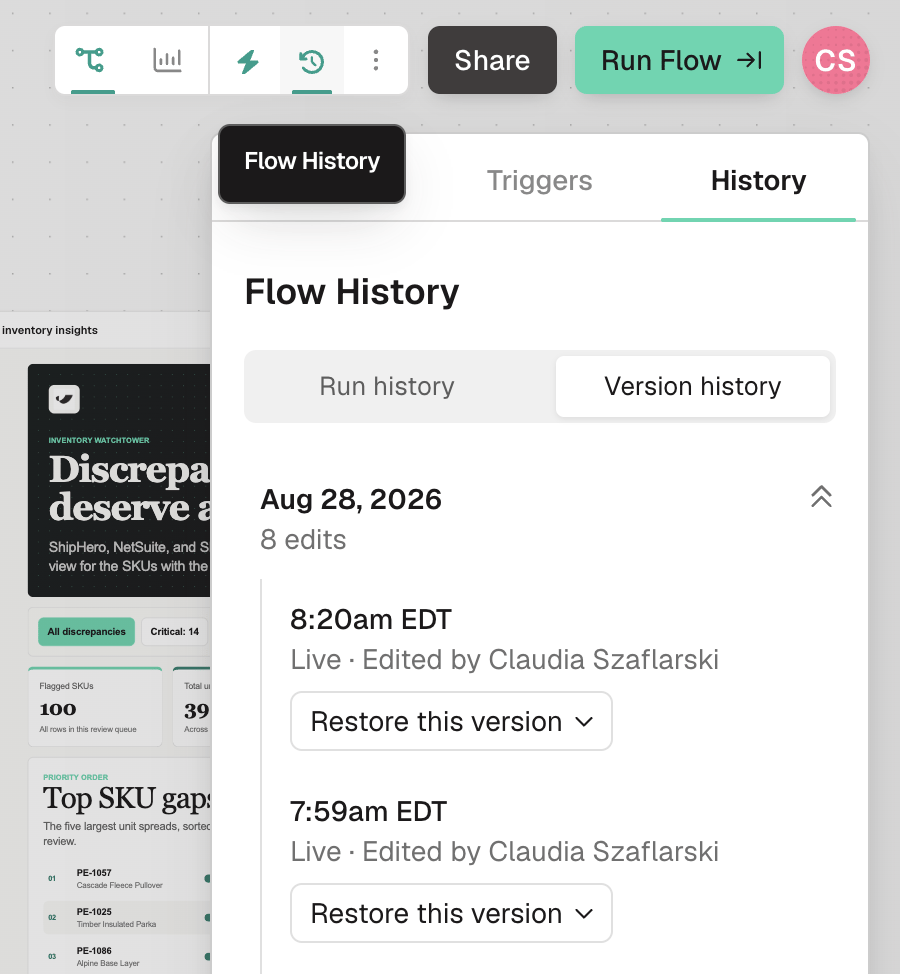
Versions are coalesced into 5-minute chunks to keep the timeline scannable. We load 50 versions at a time; click **Load more** for older ones.
### Restoring a previous version
Click **Restore this version** below a version to open its menu. The available actions depend on whether you're in the live or draft version.
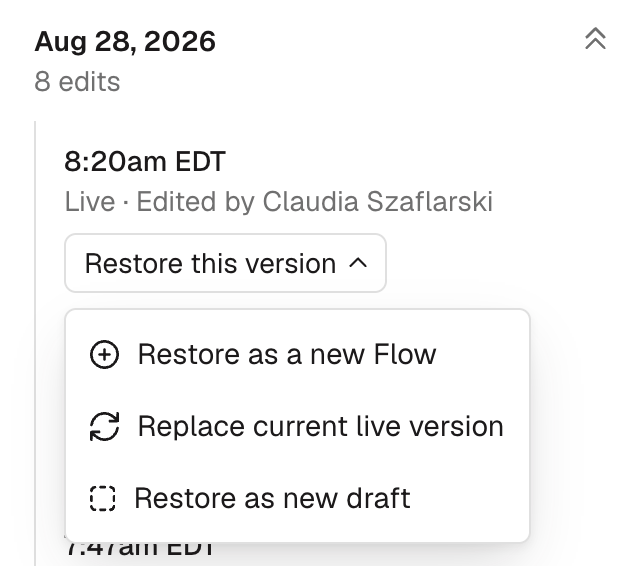
From the **live** version, you can:
* **Replace current live version.** Overwrites the live version with the selected version's content.
* **Restore as new draft.** Writes the selected version to a new draft, or replaces your existing draft.
* **Restore as a new Flow.** Creates a brand-new flow from the selected version, with you as owner. You're redirected to it once it's created.
From a **draft** version, you can **Restore as new draft** (replacing your existing draft) or **Restore as a new Flow**.
Restoring never deletes anything. It adds a new entry at the top of your history with a reference to the version it was restored from, and the original stays where it was in the timeline. Changed your mind? Use `⌘/Ctrl + Z` to undo, before refreshing the page.
### Permissions
Editors, content admins, and org admins can view version history and restore any version. Viewers can see version history, but restore actions are disabled.
## Retention
The current version of a live or draft flow is retained for the life of the flow. Once superseded, a prior version is retained for up to 30 days before deletion.
## FAQs
Their name stays on any version entries they created. Version history is part of your organization's audit trail, so we preserve attribution even after a user is removed.
Most canvas changes create a snapshot: adding steps, moving steps, modifying a card. Activity within a 5-minute window is coalesced into a single entry.
Yes. If you restore and immediately want to revert, undo takes you back. Undo history clears on page refresh, so don't refresh between restoring and undoing.
Yes, for both, so you can restore from a draft state as well as a published one.
Not directly from the UI yet. Reach out to [help@parabola.io](mailto:help@parabola.io) to recover content from a deleted flow.
We capture those snapshots the same way as human edits. The user interacting with the AI chat is attributed to the snapshot.
For some existing customers, we backfilled versions that existed before this feature was released. Those backfilled versions don't include user attribution, because that information wasn't being captured previously. Any version created after the feature was turned on for your organization includes the editor's name.