Documentation Index
Fetch the complete documentation index at: https://parabola.io/docs/llms.txt
Use this file to discover all available pages before exploring further.
✅ Step-by-Step Instructions
Limit to 1 row of data
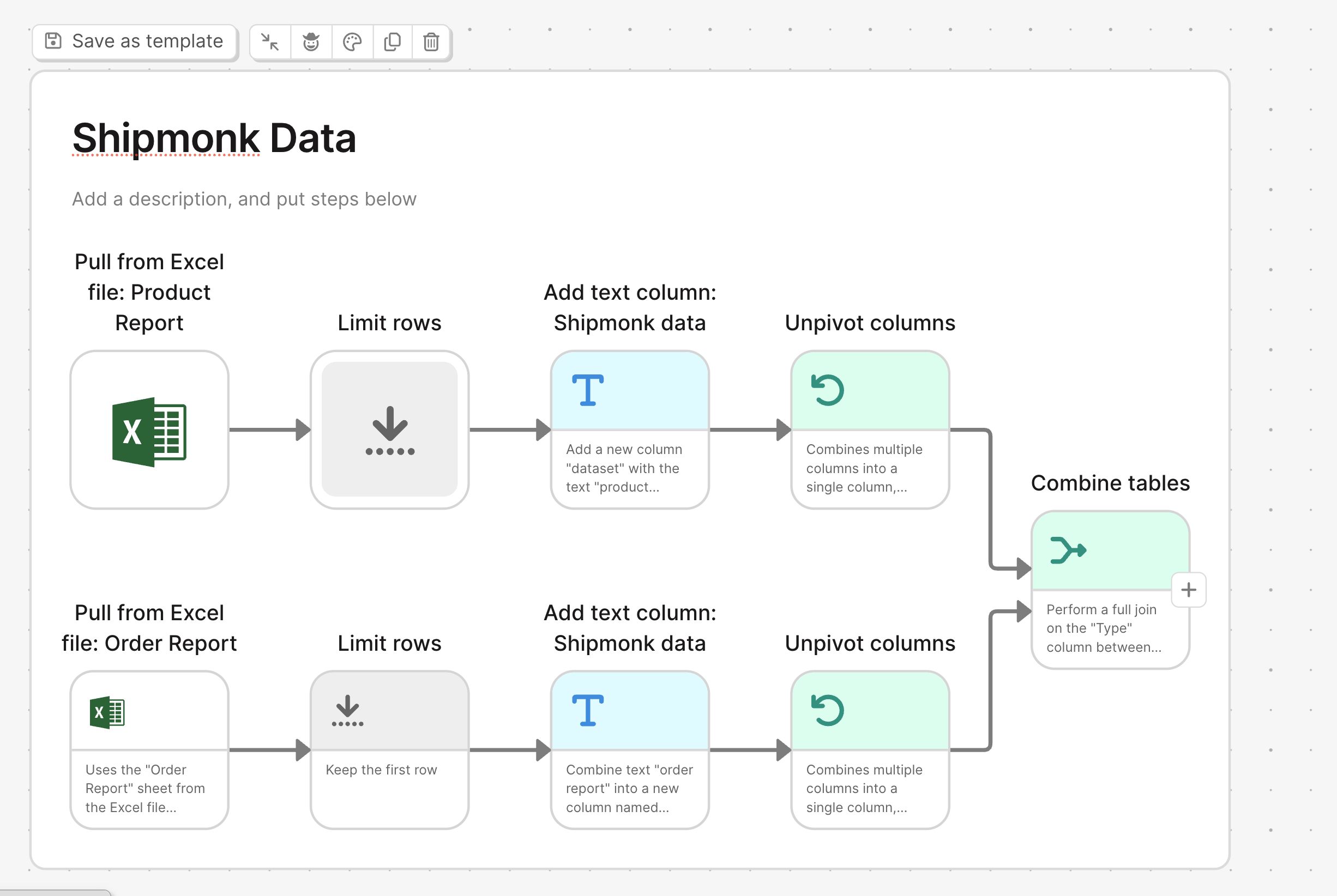
Add a limit Rows step to each dataset to limit them to just 1 row. You only need the column names and 1 row of data for this comparison.
Tag each dataset
Add an Add Text Column step to each dataset.
- Create a new column called something like
type - Assign a unique value to each: e.g.,
Dataset 1andDataset 2
Unpivot the columns
Use an Unpivot Columns step on each dataset.
- Unpivot all columns except the new
typecolumn - This transforms column headers into row values
Combine the datasets
Use a Combine tables step:
- Match on the
columnname from each unpivoted dataset - Keep all rows to include matches and differences
🧠 Why This Works
By unpivoting and tagging each dataset, you convert column headers into values, which makes it easy to compare structure across datasets using Parabola’s visual tools—no code needed. Let us know if you want a template for this setup!