What is email content extraction?
Not all useful data lives in attachments. Sometimes what you actually need is in the email itself — a confirmation number in the subject line, a list of shipment IDs in the body, or details about who sent the message and when. Email content extraction lets you pull that data into Parabola without needing a file attachment at all. It’s also how you capture email metadata alongside attachment data when you need both at once.Setting up the step
In the Pull data from dropdown, select Email content or Email content and attachment.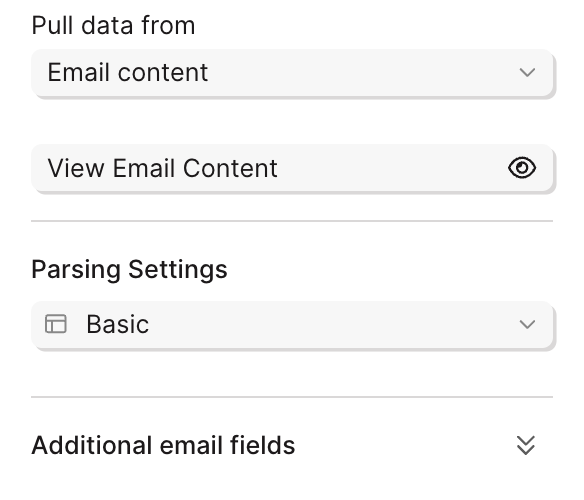
Parsing settings
When you select Email content, you have two parsing options:- Basic
- Extract with AI
Pulls in standard email fields as individual columns. No AI required — fast and straightforward.Included by default: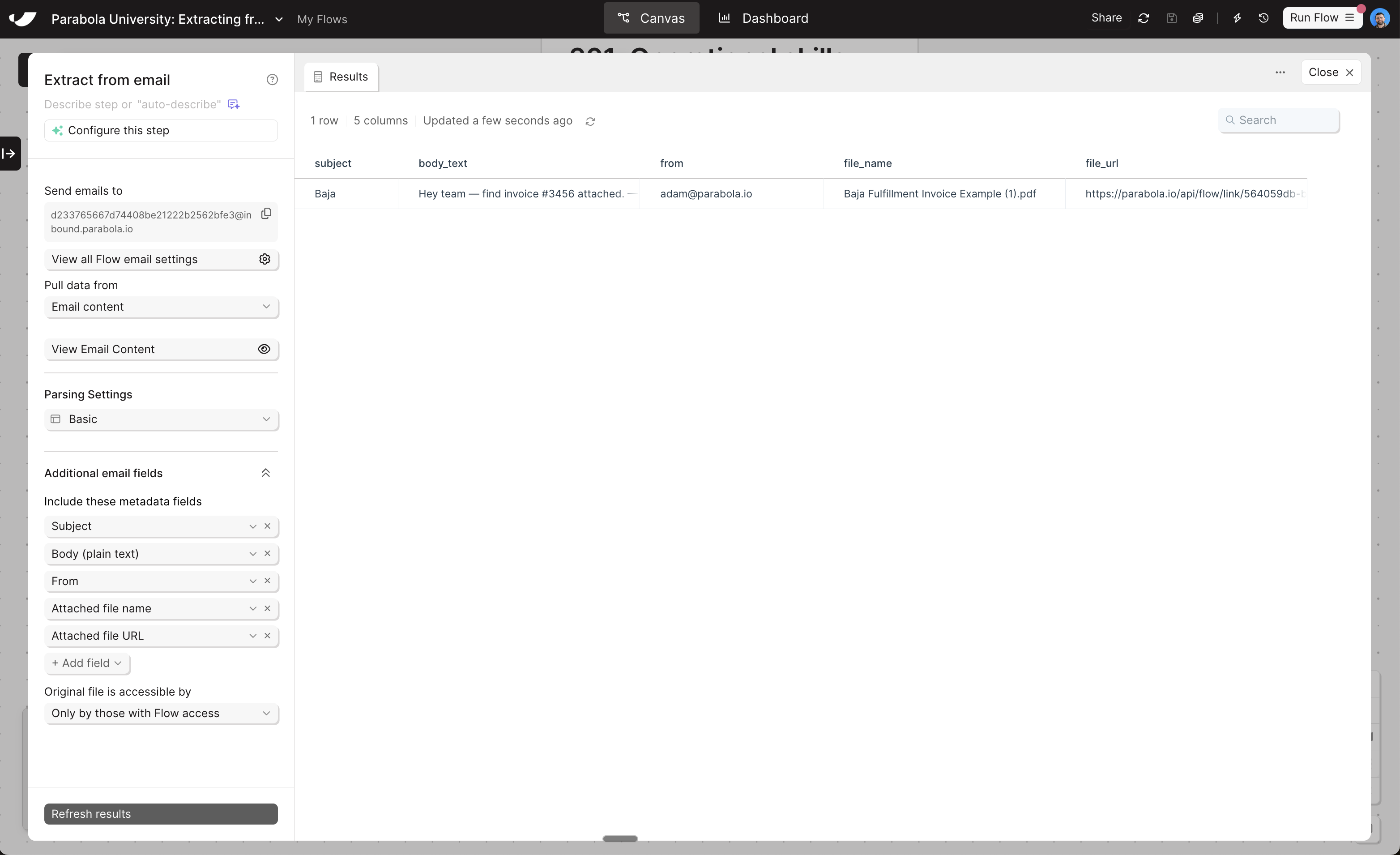
- Subject
- Body (plain text)
- From
- CC
- Attached file name
- Body (HTML) — the full HTML version of the email body
- Body (all URLs) — extracts every link from the email body as separate values
- Attached file URL — the Parabola-hosted download link for the attachment
Combining email content with attachments
You don’t have to choose between email content and attachment data. Selecting Email content and attachment from the Pull data from dropdown brings both into the same step. This is the right configuration when you want:- The sender’s address or subject line alongside the data from an attachment
- A complete record of who sent what and when, paired with the structured data from the file
File access control
For emails with attachments, at the bottom of the panel, “Original file is accessible by” controls who can access any file URL associated with this step. Available options include:- Anyone with the link
- Anyone within your Parabola team
- Only those with flow access
Pro tipYou can use two seperate steps if you want one step to parse the attachment, and another step to parse the body. This can be useful if you want to leverage the Extract with AI option, which is only available if the step is set to parse just the Email content.
What’s next
In the final lesson, we’ll set up auto-forwarding so that emails route into Parabola automatically — no manual forwarding required, and no action needed when a new email arrives.Building challenge
In the same flow that we just used in the last lesson, add a new Extract from email step to the canvas.
1
Set "Pull data from" to "Email content"
Click “Update results” after making the change, using “Basic” parsing
2
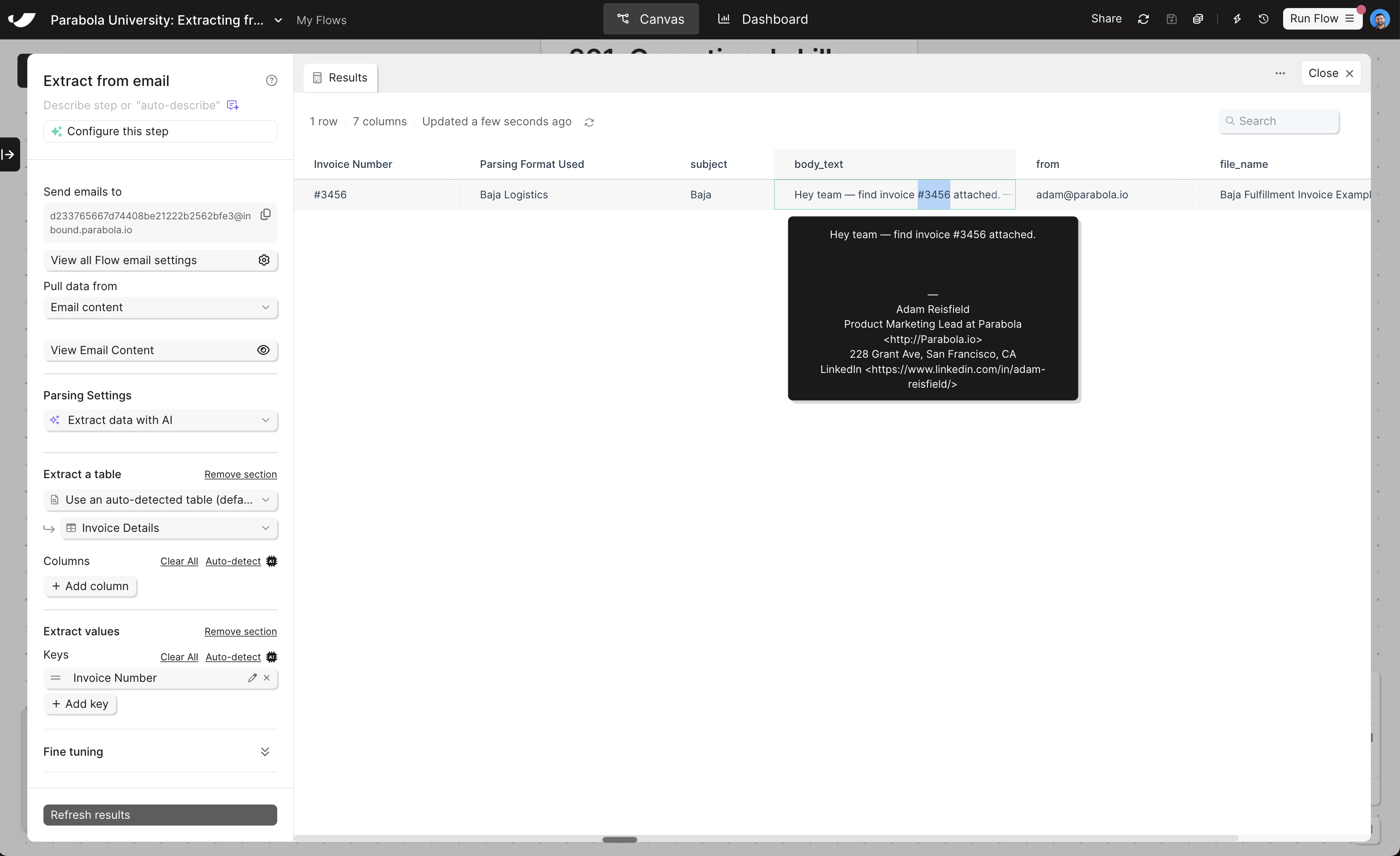
Change the "Parsing setting" to "Extract data with AI"
- Click “Extract individual values”
- Add “Invoice Number” under “Keys”
-
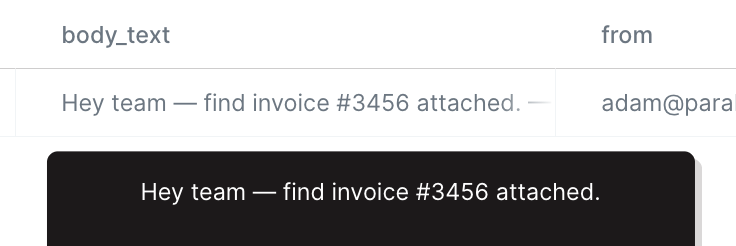
Remember: We put the invoice number in the body of the email in the previous lesson
-
Remember: We put the invoice number in the body of the email in the previous lesson
3
Update results
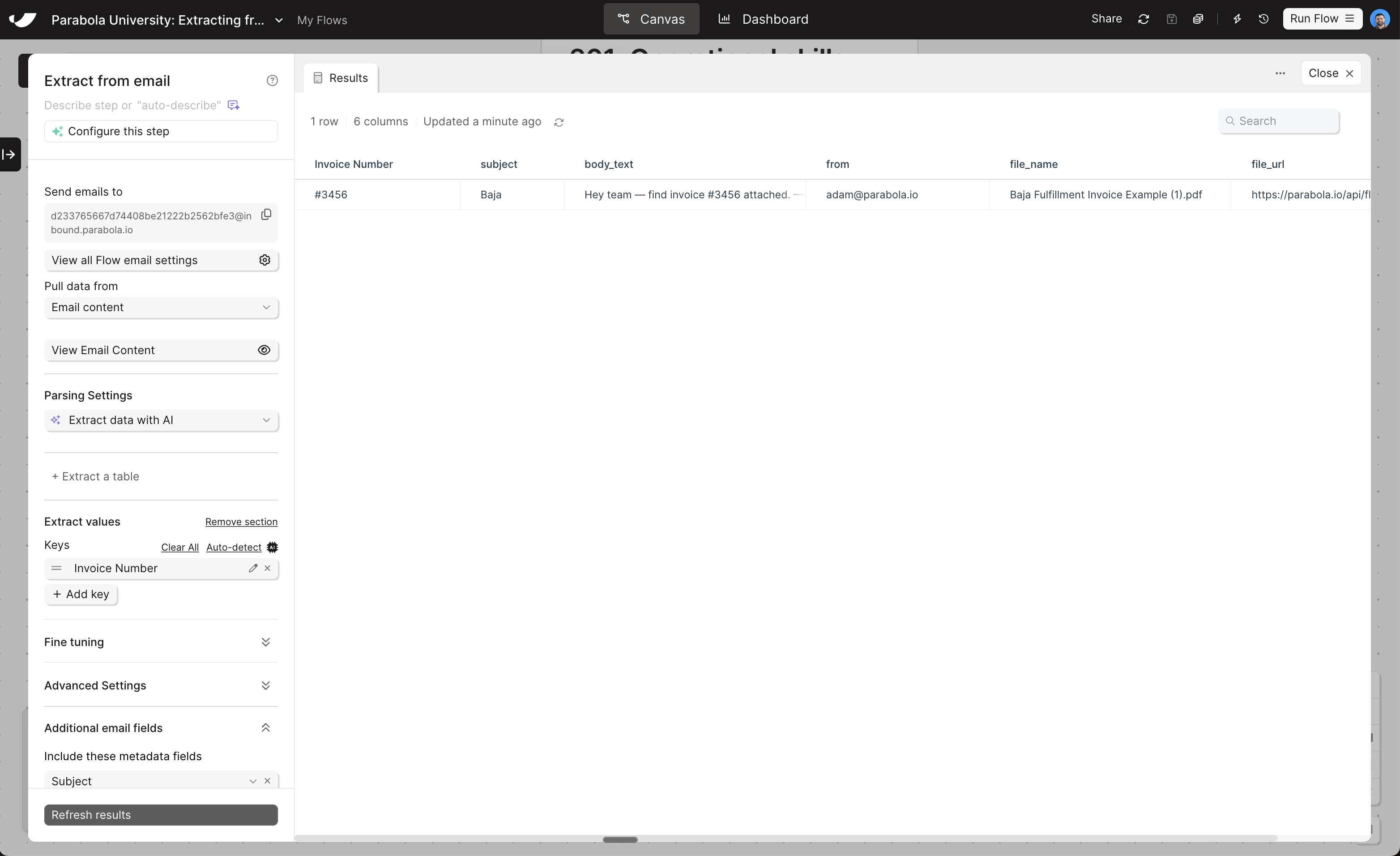
You should see “Invoice Number” outputting a clean value in the first column, plus your other email values
Check your work
Check your work