JSON is the format you get when you export from an API by hand, dump a payload from a webhook, or save a config file. The Use JSON file step pulls a JSON document into your Prowork flow and flattens it into a table you can transform like any other dataset.
Use JSON file
The Use JSON file step pulls a dataset from a JSON file you upload. Once the data is in your flow, you can join, filter, and reshape it with the rest of Prowork’s transform steps.
Configuration
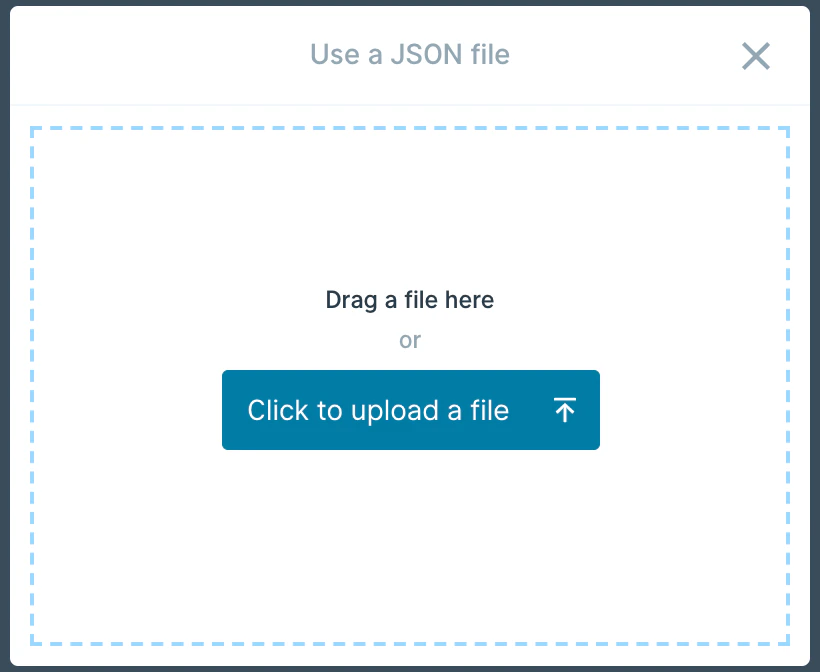
Drag a file onto the canvas or click Click to upload a file.
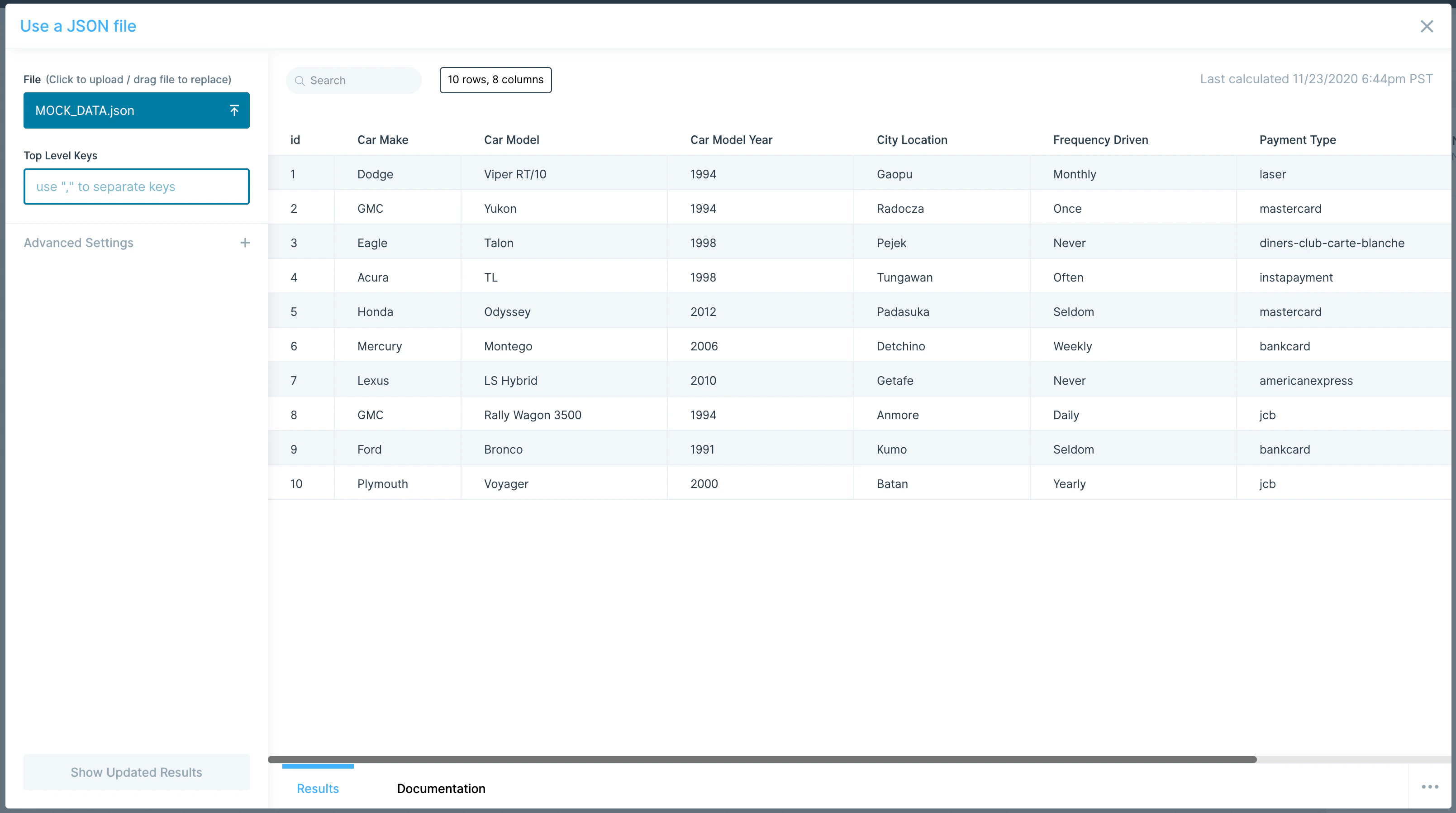
After upload, the step opens to its settings page and shows the parsed JSON.
In Advanced Settings, you can skip a number of rows or columns when importing: rows skip top-down, columns skip left-to-right.
Helpful tips
- Files don’t auto-update. Prowork can’t pull updates from your computer automatically. To pull live JSON on each run, use the Pull from an API step or grab the file from cloud storage.
- Nested fields flatten by default. Deeply nested JSON gets flattened into columns with dot-notation names. If your downstream logic needs them clean, use an Edit columns step to rename them.
- Storage and security. Uploaded files are stored in an Amazon S3 bucket. All connections use SSL and are encrypted.
- Pull from an API: for live JSON from a remote endpoint
- Pull from webhook: to receive JSON pushed by another service
- Edit columns: to rename flattened nested fields
- Edit columns: to drop fields you don’t need
- Custom transform: to reshape complex nested arrays
Last modified on August 29, 2026