

Pull from Front
The Pull from Front step retrieves data from your Front account so you can build reports on team performance, response times, customer activity, and message volume.How to authenticate
1
Add a Pull from Front step to your flow and click Authorize.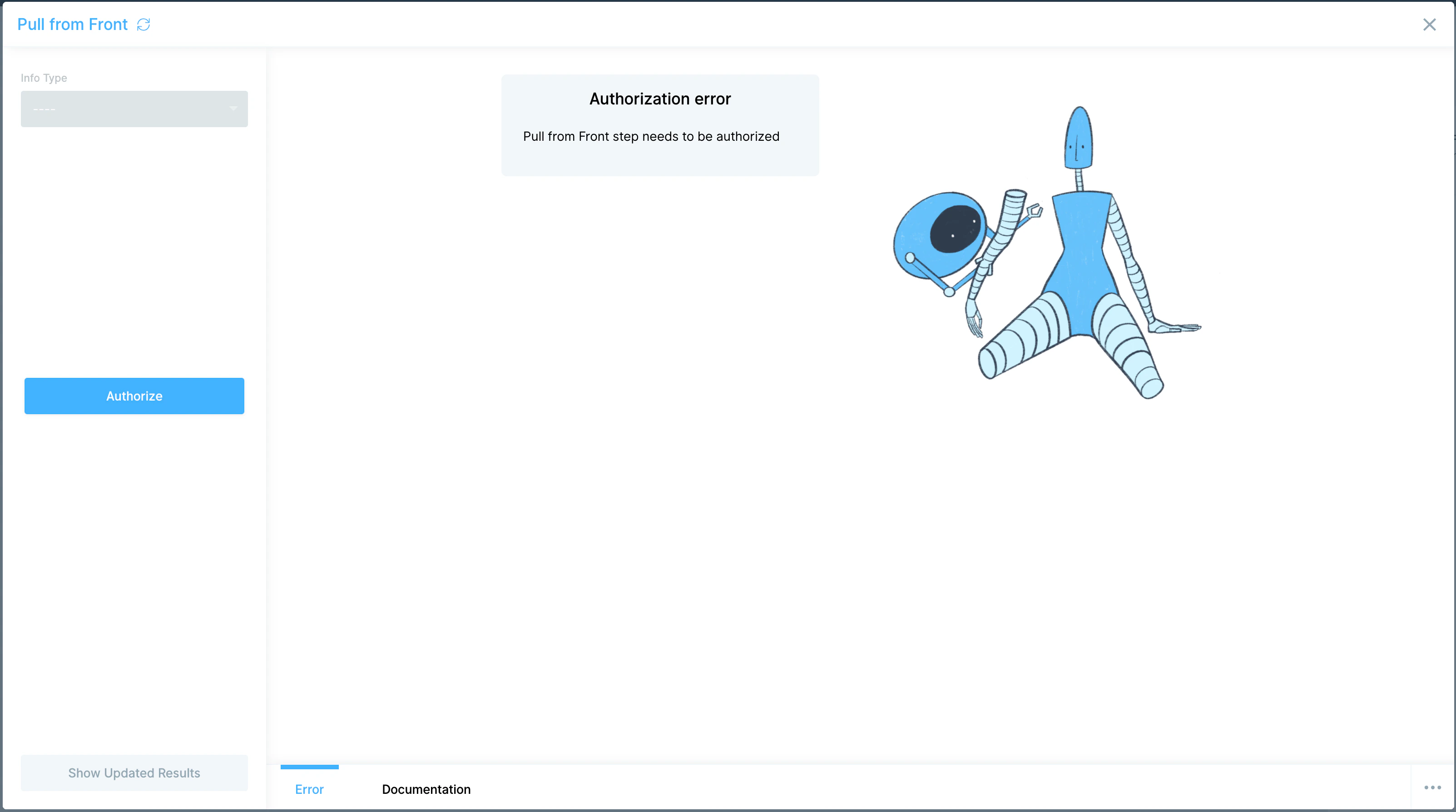
2
A pop-up opens asking you to authorize again. Approve the connection and you’ll be returned to your Prowork flow.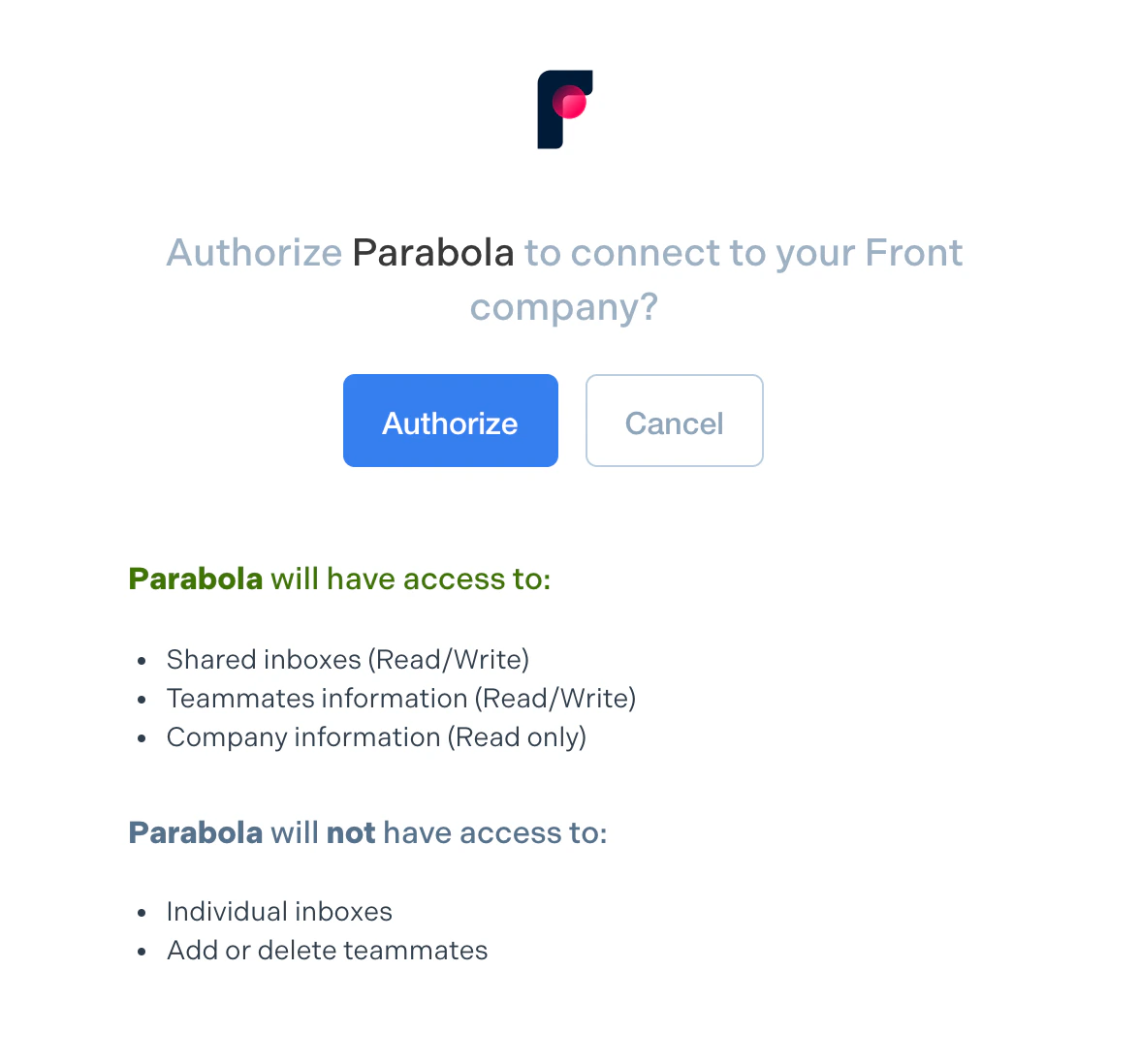
Configure your settings
Pick an Info Type to choose which Front resource to pull. Each type returns one row per record (per teammate, per tag, per contact).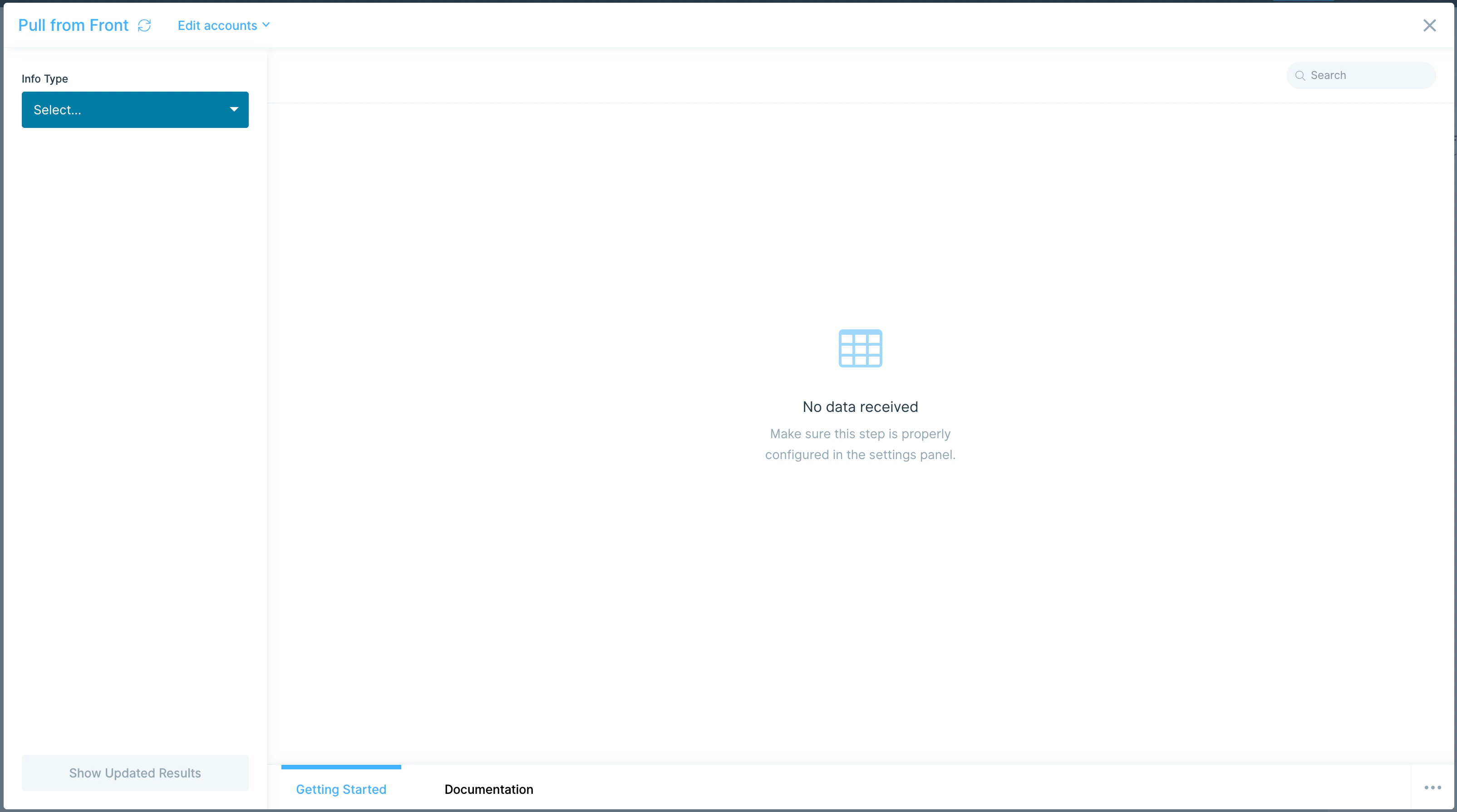
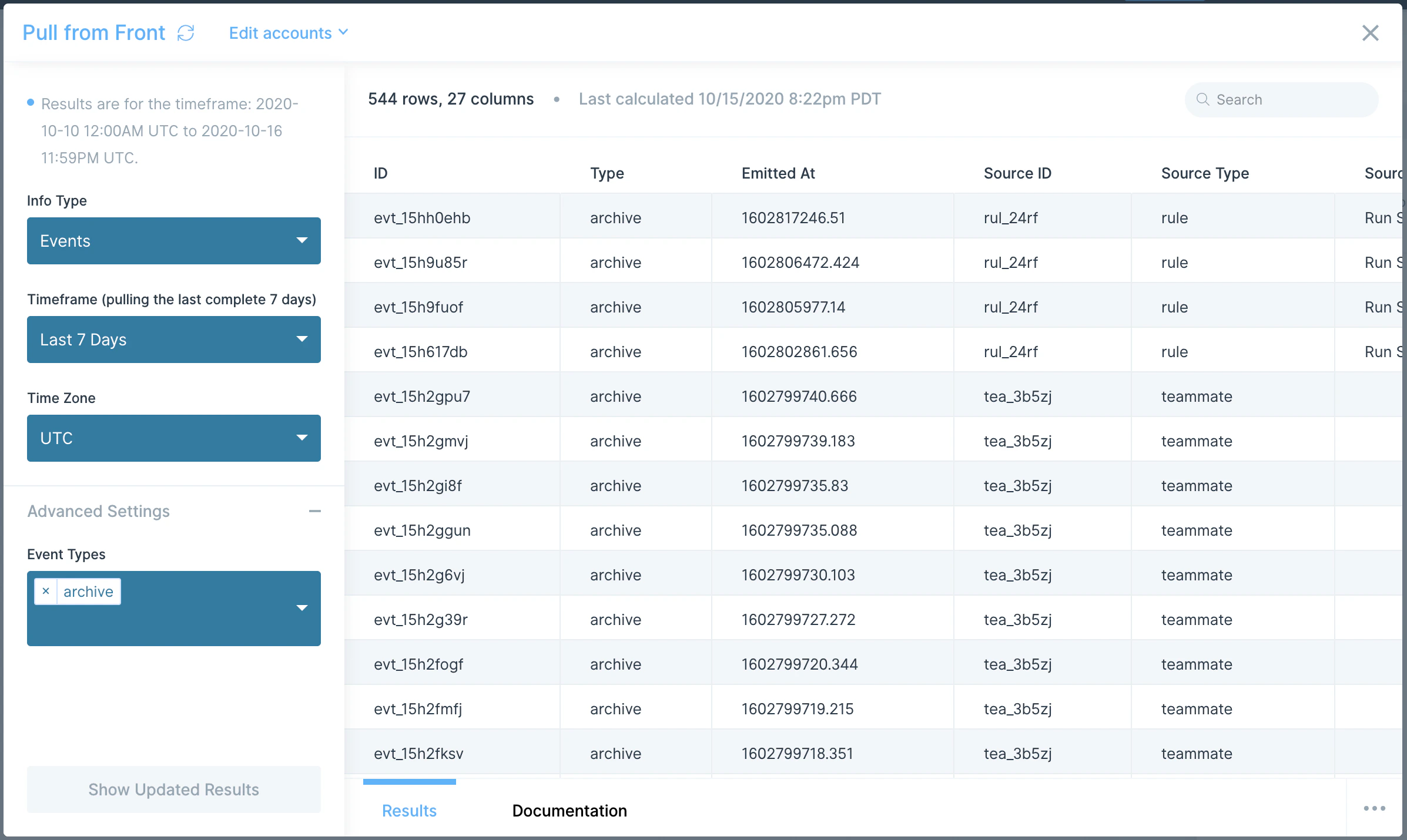
- Events: conversation lifecycle events (assigned, replied, archived, tagged) with timestamps and actor.
- Teams: Front teams in your account with IDs and metadata.
- Teammates: individual Front users, optionally filtered by team. Pair with a Metric Type dropdown to pull per-teammate performance metrics (for example,
team_table) or team-wide rollups (for example,avg_first_response_time). - Contacts: your customer/contact records with handles, names, custom fields, and groups.
- Tags: every tag in your Front account, used for filtering conversations downstream.
Available data
Front’s API exposes most of what’s in your shared inbox. The native step covers the resources operators most often pull; for everything else, use a Pull from an API step pointed at Front’s Core API.- Conversations: subject, status (open, archived, deleted), assignee, channel, tags, recipient, last activity. Use a Pull from an API step for the full conversation list with filters.
- Messages: individual messages within a conversation, with body, sender, recipients, attachments, and timestamps.
- Events: conversation lifecycle events for SLA and response-time analysis.
- Teams and Teammates: team membership and per-user metrics for staffing and performance reporting.
- Contacts: customer profiles with handles (email, phone, social), names, descriptions, and custom fields.
- Tags: full tag list for categorization and filtering.
- Channels: inboxes connected to Front (email, SMS, chat, social).
- Analytics rollups: table and rollup metrics like
avg_first_response_time, available via Metric Type when Teammates is selected.
Common use cases
- Build a support performance dashboard: Pull Teammates with table metrics on a schedule, sum response and resolution times by agent and team, then drop the result into Google Drive, Smartsheet, or Looker.
- Track SLA compliance by customer or tier: Join Front Events with customer tier data from a CRM like HubSpot or Salesforce to find SLA breaches by account size.
- Tie support volume back to orders: Match Front conversations with orders from Shopify, Amazon Seller Central, or Squarespace to identify which products and SKUs drive support load.
- Sync new contacts to email: Push new Front contacts into Mailchimp or Klaviyo audiences so marketing can follow up on inbound inquiries automatically.
- Alert on volume spikes: Send a Slack message when conversation volume on a key tag (refund, outage) exceeds a threshold, or when a teammate’s open queue passes a cap.
- Send Front data to your warehouse: Push raw events and conversation history into Snowflake, BigQuery, or Redshift for long-term analysis and joins with the rest of the business.
Tips for using Prowork with Front
- Convert seconds to friendly units. Front’s time-based metrics (response time, resolution time) come back in seconds. Use an Insert math column step to divide into minutes, hours, or days for reporting.
- Use Teammates + Metric Type for per-agent metrics. For per-teammate performance numbers, set Info Type to Teammates, pick a team, and switch Metric Type to Table Metrics (for example,
team_table). For team-wide aggregates, use Rollup Metrics. - Filter Events by date. A high-volume Front account generates a lot of events. Pull with a date filter and run the flow on a tight schedule rather than reprocessing everything each time.
- Match cadence to use case. Hourly for live ops dashboards, daily for SLA and CSAT reporting, weekly for trend and capacity reviews.
- Normalize handles before joining. Front contacts can have multiple handles (work email, personal email, phone). Pick one as the join key, or pivot the contacts table to one row per handle before matching to other systems.
- Document flows with cards. Front’s data model has a lot of moving pieces (conversations, messages, events, tags, channels). Group steps into cards with clear names so future-you can audit and tune the flow.
FAQ
Can I push data back into Front?
The Pull from Front step is read-only. To create or update conversations, send messages, or update tags, use a Send to an API step pointed at Front’s Core API with an API token from Settings → Developers in Front.Does Prowork support Front webhooks (Front Rules)?
Yes, indirectly. Configure a Front rule to call a webhook URL on conversation events, and point that URL at a Prowork webhook trigger on a separate flow. The flow then runs as soon as the rule fires.How do I pull conversations and messages, not just events and contacts?
Use a Pull from an API step against/conversations or /conversations/:conversation_id/messages. Authenticate with a Front API token (Bearer auth). The native step covers the most common resources, but the API exposes everything.
What metrics are available under Metric Type?
When Info Type is Teammates, switch to Table Metrics for per-teammate rollups (team_table is the most common) or Rollup Metrics for team-wide aggregates like avg_first_response_time and avg_handle_time. The full list is in Front’s Analytics API docs.
How do I report on a specific tag or channel?
Pull Tags or Channels first to grab the IDs. Then use a Pull from an API step against/conversations with q=tag:<tag_id> or filter the conversation pull by channel_id afterward.
With Front and Prowork connected, the support reports, SLA dashboards, and customer-tier analyses your team rebuilds every week run on a schedule with output landing in the systems where the team actually works.