

Pull from ExchangeRate-API
The Pull from ExchangeRate-API step calls the ExchangeRate-API endpoints with your API key and loads the result into your flow. Use it to fetch the latest rate for a currency pair, convert a specific amount, or pull rate history for a base currency.How to authenticate
ExchangeRate-API uses a simple API key for authentication.1
Get your API key from ExchangeRate-API
- Sign up at ExchangeRate-API (no credit card required for the free plan, which includes 1,500 requests per month).
- Copy your API key from the dashboard and store it somewhere secure.
2
Connect in Prowork
- In your Prowork flow, add a Pull from ExchangeRate-API step.
- Click Authorize and paste your API key when prompted.
- Prowork stores the key securely and uses it on every request.
Available data
Using the ExchangeRate-API integration, you can pull:- Currency pair conversion rates: the latest rate between any two currencies using ISO 4217 three-letter codes (USD, EUR, GBP, JPY, etc.). Each response includes the base currency, target currency, conversion rate, and the timestamps for last and next update.
- Currency conversions with amounts: convert a specific amount from one currency to another and get back both the rate and the calculated result. Useful for invoice totals, product prices, or transaction batches.
- Update timestamps: every response includes
time_last_updateandtime_next_update, so you always know how fresh the rate is.
Common use cases
- Normalize multi-currency revenue: Pull transactions from Shopify, Stripe, Amazon Seller Central, or Squarespace, convert each amount to your reporting currency, and post the result to NetSuite or QuickBooks Online.
- Display localized pricing: Convert a product catalog from Shopify or Magento into local currencies before pushing it to a regional storefront or Airtable sheet.
- Reconcile cross-currency invoices and payments: Match vendor invoices or customer payments in different currencies against your books by converting everything to a single base currency. Pair this with Ramp or Coupa data for a full AP reconciliation.
- Audit historical conversion rates: Compare the rates used in past transactions against current market rates to flag discrepancies, overcharges, or stale values, then drop the audit into Google Drive or Smartsheet.
- Automate landed cost calculations: Combine FX rates with freight invoices from DHL, FedEx, or Flexport, plus customs and tariff data, to calculate landed cost in your reporting currency for international inbound shipments.
- Month-end FX revaluation: On the last day of the month, pull rates for every currency in your books, revalue foreign-currency balances, calculate unrealized gains and losses, and post journal entries to NetSuite or SuiteQL.
- Alert on big rate moves: Filter for currency pairs where the daily rate moved more than X percent and send a Slack message to the finance team.
Tips for using Prowork with ExchangeRate-API
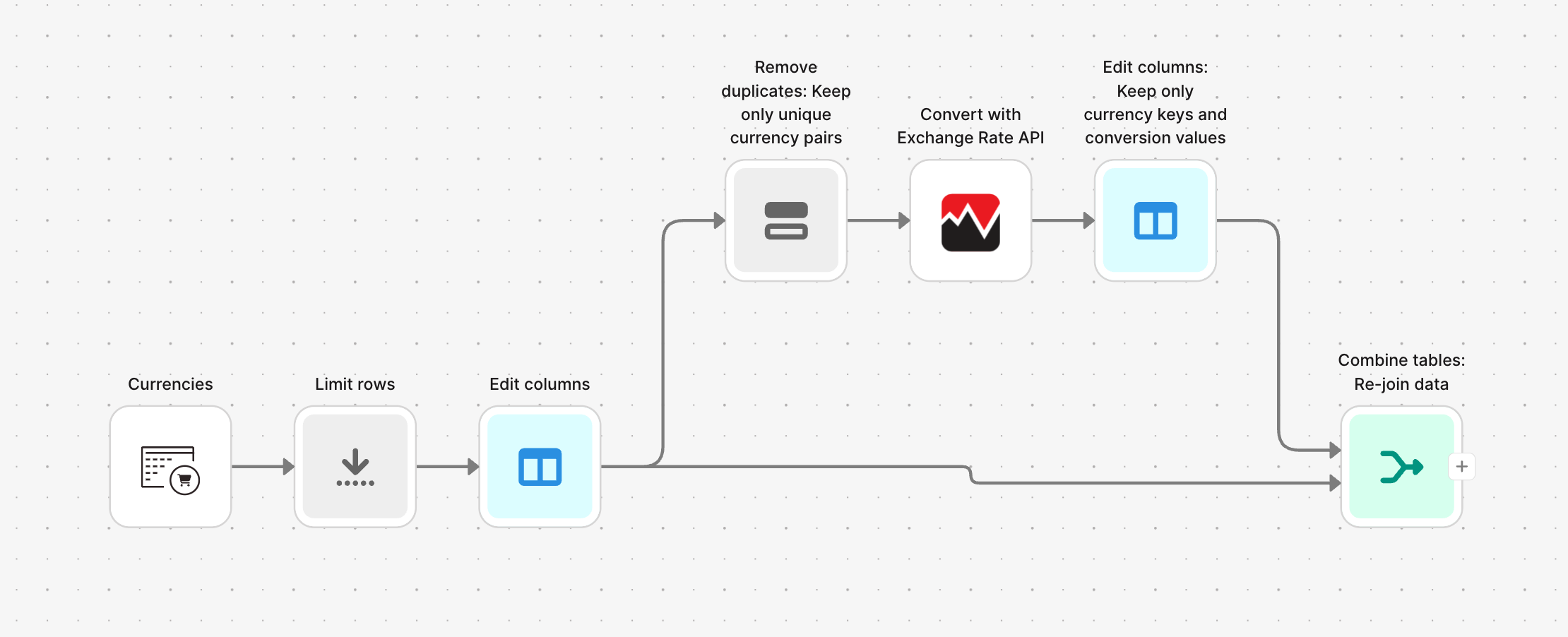
- Deduplicate currency pairs upstream. A 50,000-row transaction file may only contain 20 unique currency pairs. Pull rates once per pair, then rejoin to the full table to stay under your quota.
- Separate rate lookup from conversion. Pull unique pairs first, rejoin to the original rows, then use Add math column to multiply amounts by rates. This is faster and uses far fewer API calls than converting row by row.
- Schedule after the daily refresh. ExchangeRate-API updates rates once per day for most plans (around midnight GMT). Run your flow in the morning so it picks up the new rates.
- Save historical rates for trend analysis. Append each day’s rates to a Google Drive sheet or a database with a timestamp to build a history you can use for volatility analysis or audits.
- Standardize currency codes first. Use Find & replace or Edit text to enforce ISO 4217 (three uppercase letters) on every code before the API call. “usd” and “Usd” will both fail.
- Match cadence to use case. Daily for revenue normalization and reporting, weekly for catalog re-pricing, month-end for FX revaluation and JE postings.
FAQ
Which API plan do I need?
The free plan covers 1,500 requests per month and is enough for small flows that deduplicate pairs first. For larger volumes or historical-rate access, upgrade to a paid plan. See ExchangeRate-API pricing.Can I pull historical exchange rates?
Yes, on paid plans that include the historical endpoint. Use a Pull from an API step pointed at the historical URL with your API key and the date you want.How fresh are the rates?
The free and standard plans update rates once per day. Higher-tier plans update more frequently. Every response includestime_last_update and time_next_update so you can confirm freshness in your flow.
What happens if I exceed my monthly quota?
ExchangeRate-API returns a quota-exceeded error. Reduce calls by deduplicating currency pairs before the API step, run your flow less often, or upgrade your plan.With ExchangeRate-API and Prowork connected, the FX conversions your finance team handles by hand each month (invoice normalization, revenue rollups, period-end revaluation) run on a schedule with output landing in the systems where finance actually works.